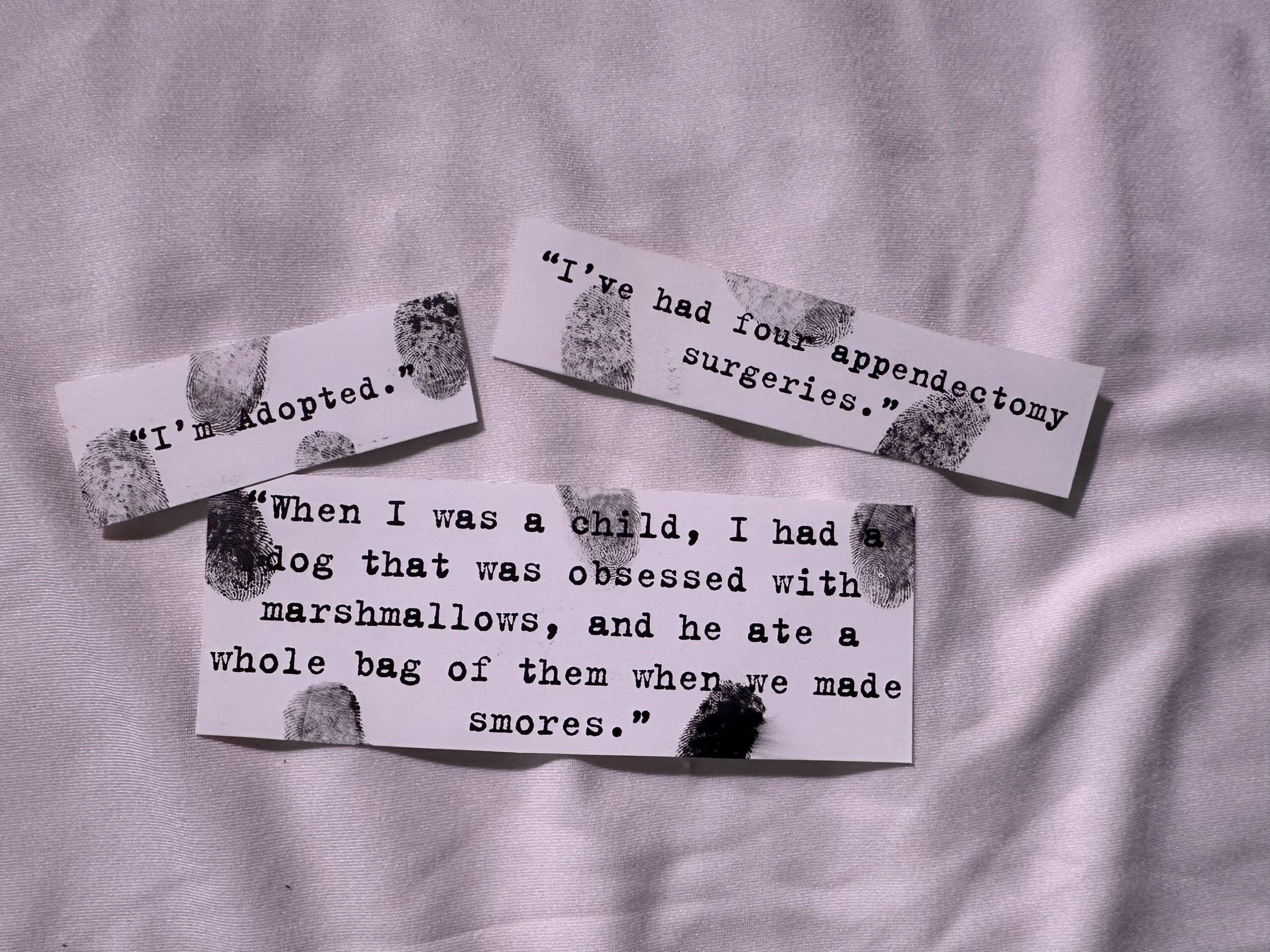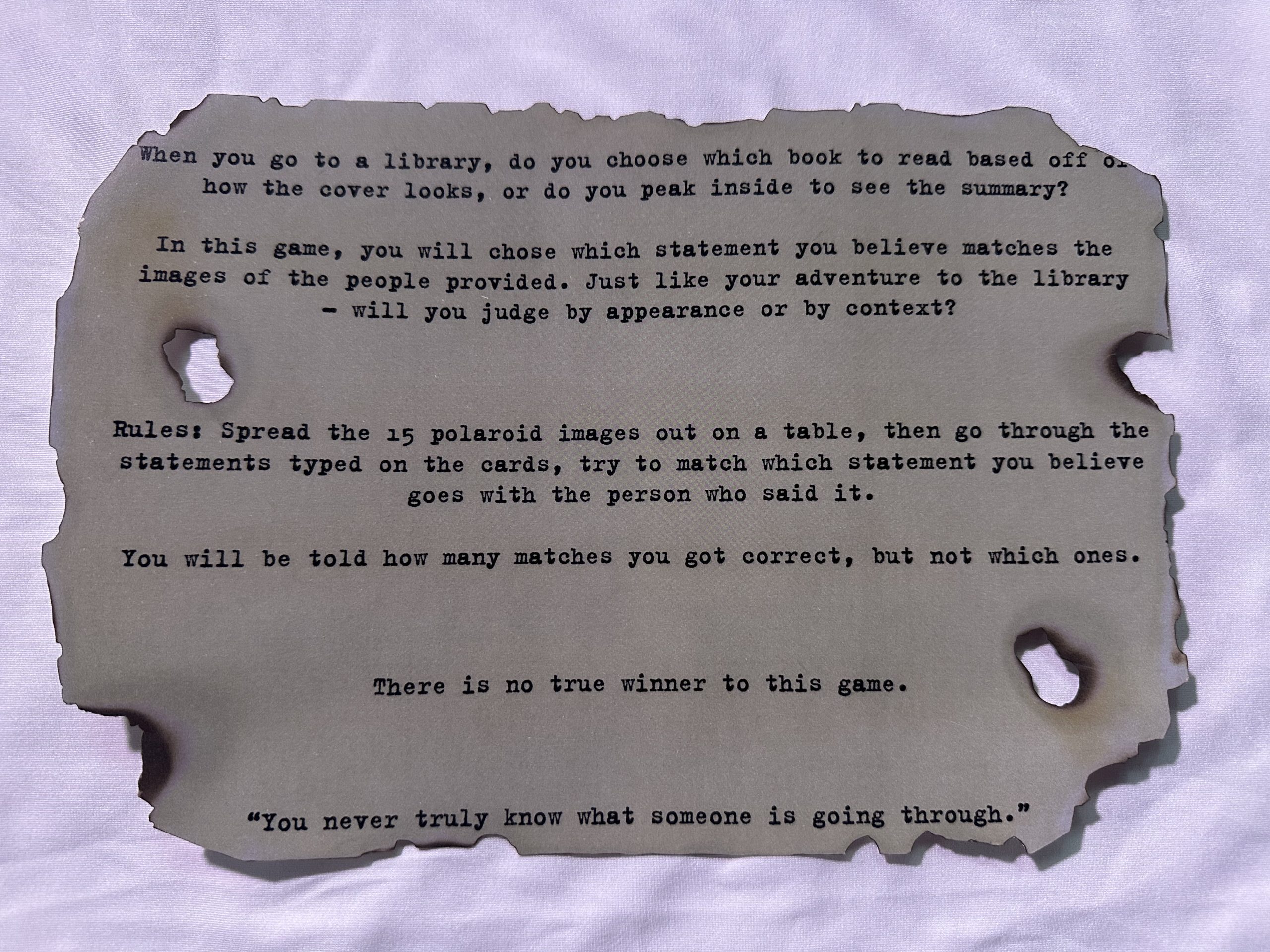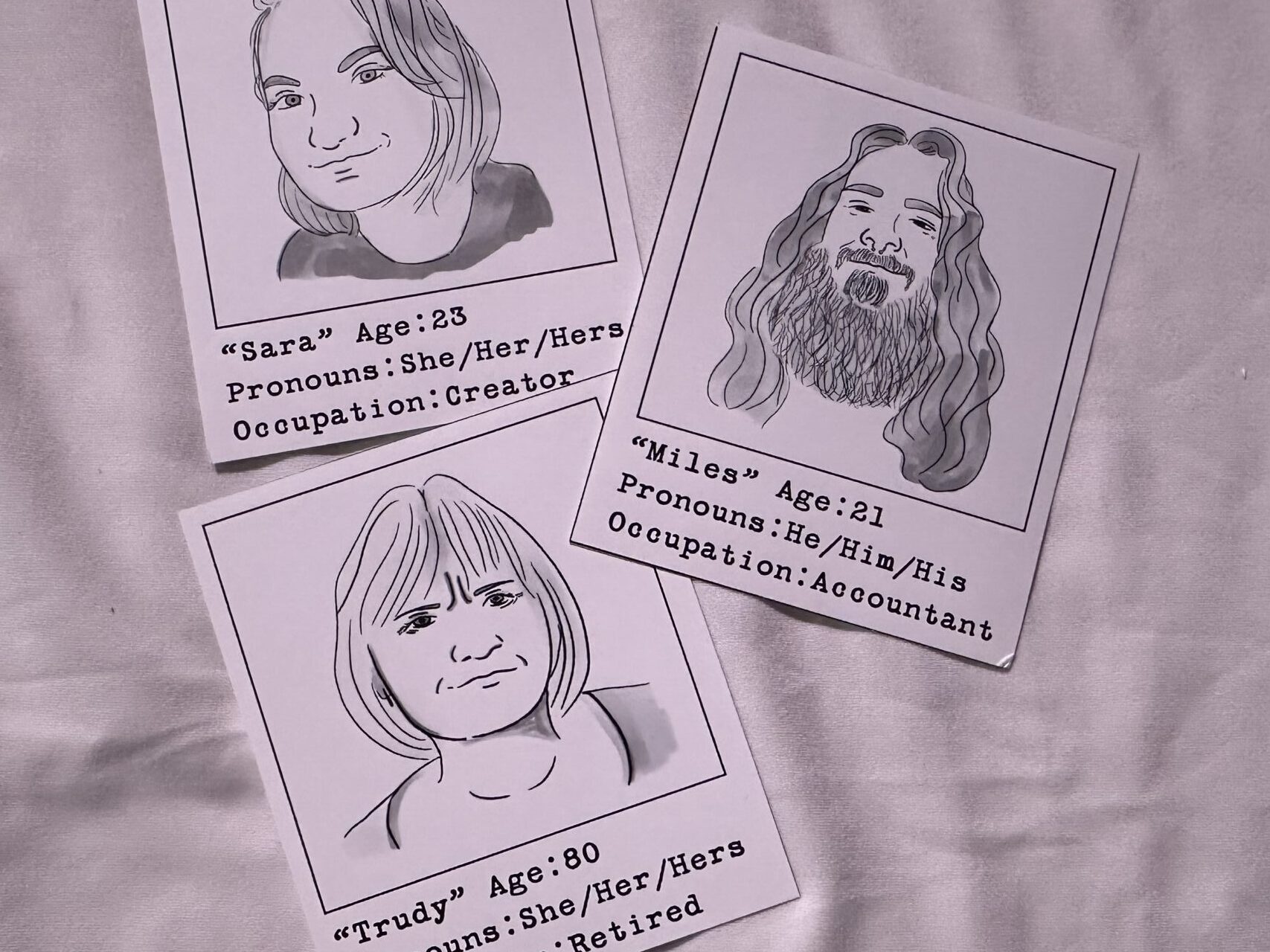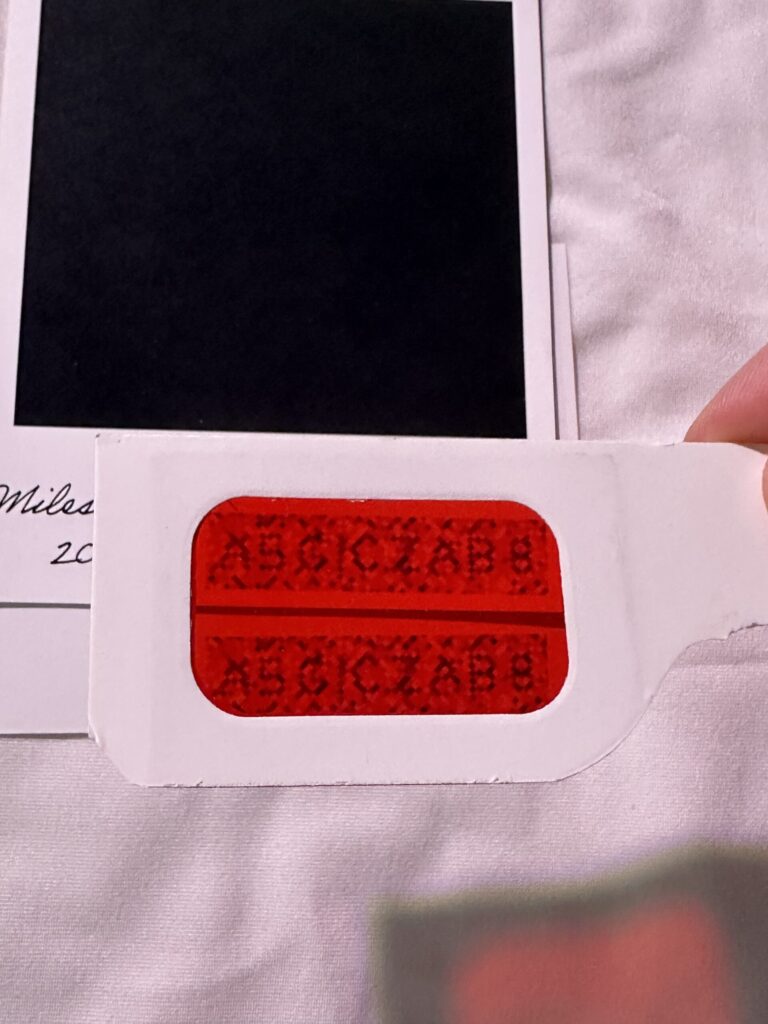
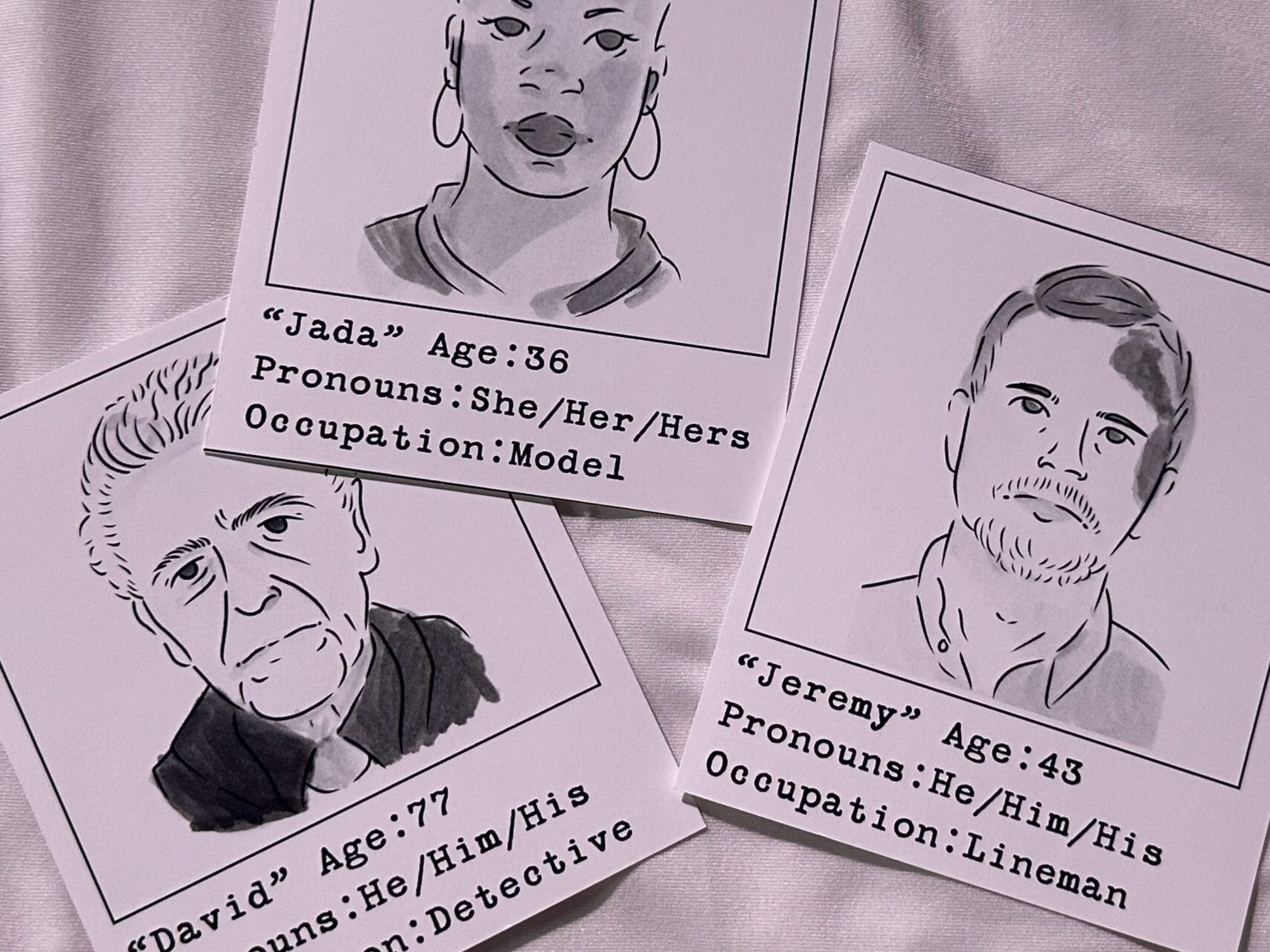
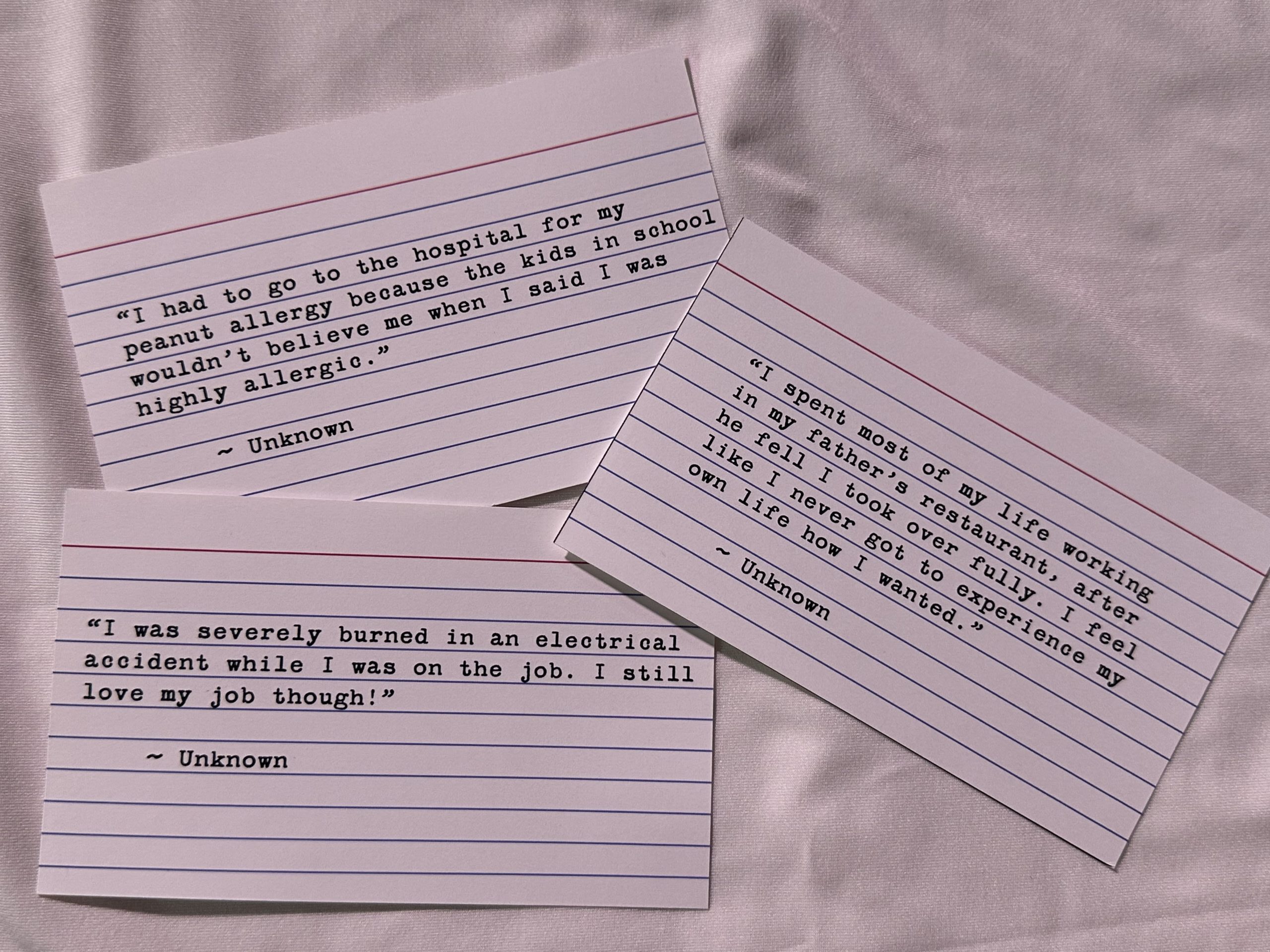
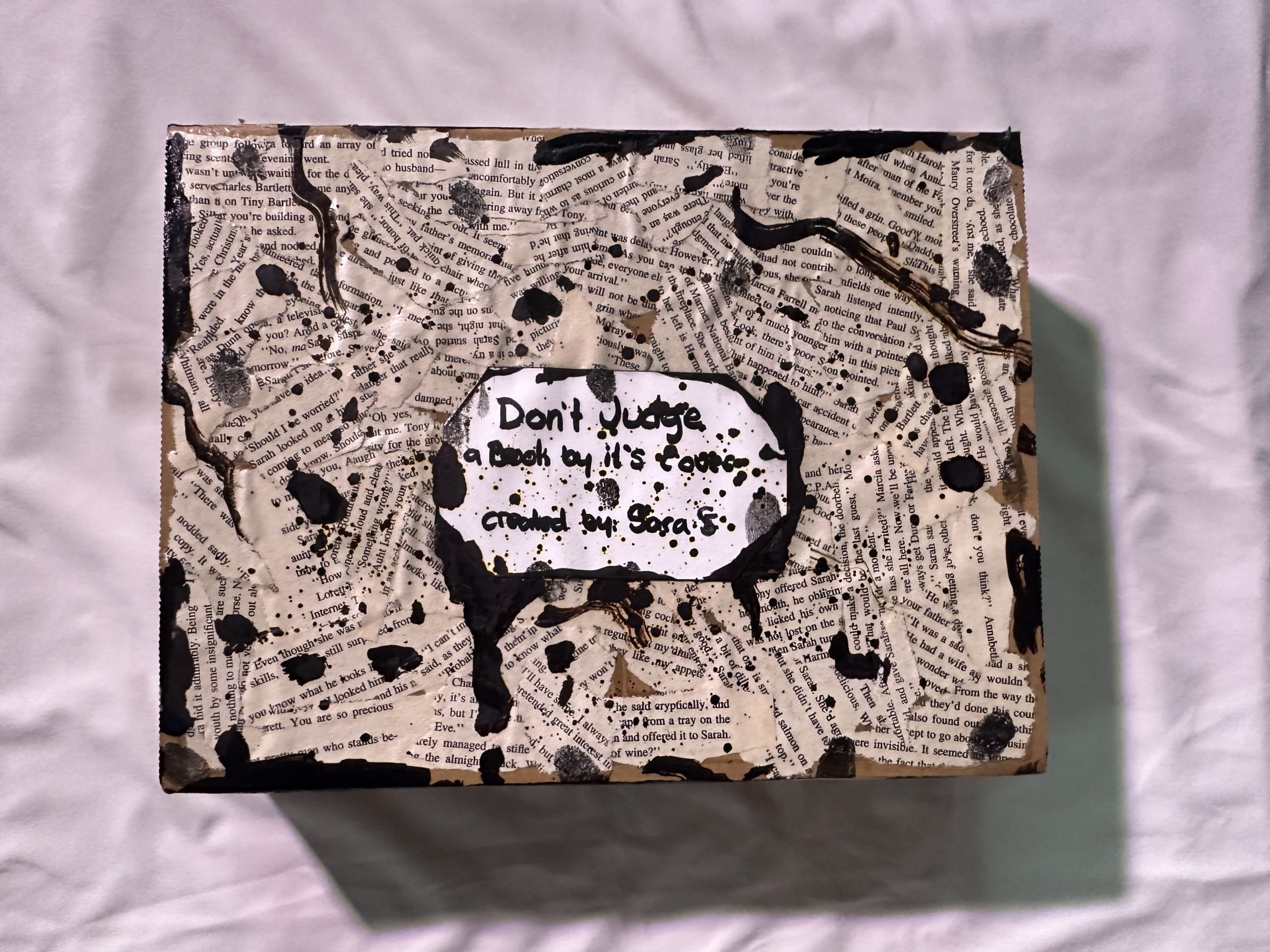
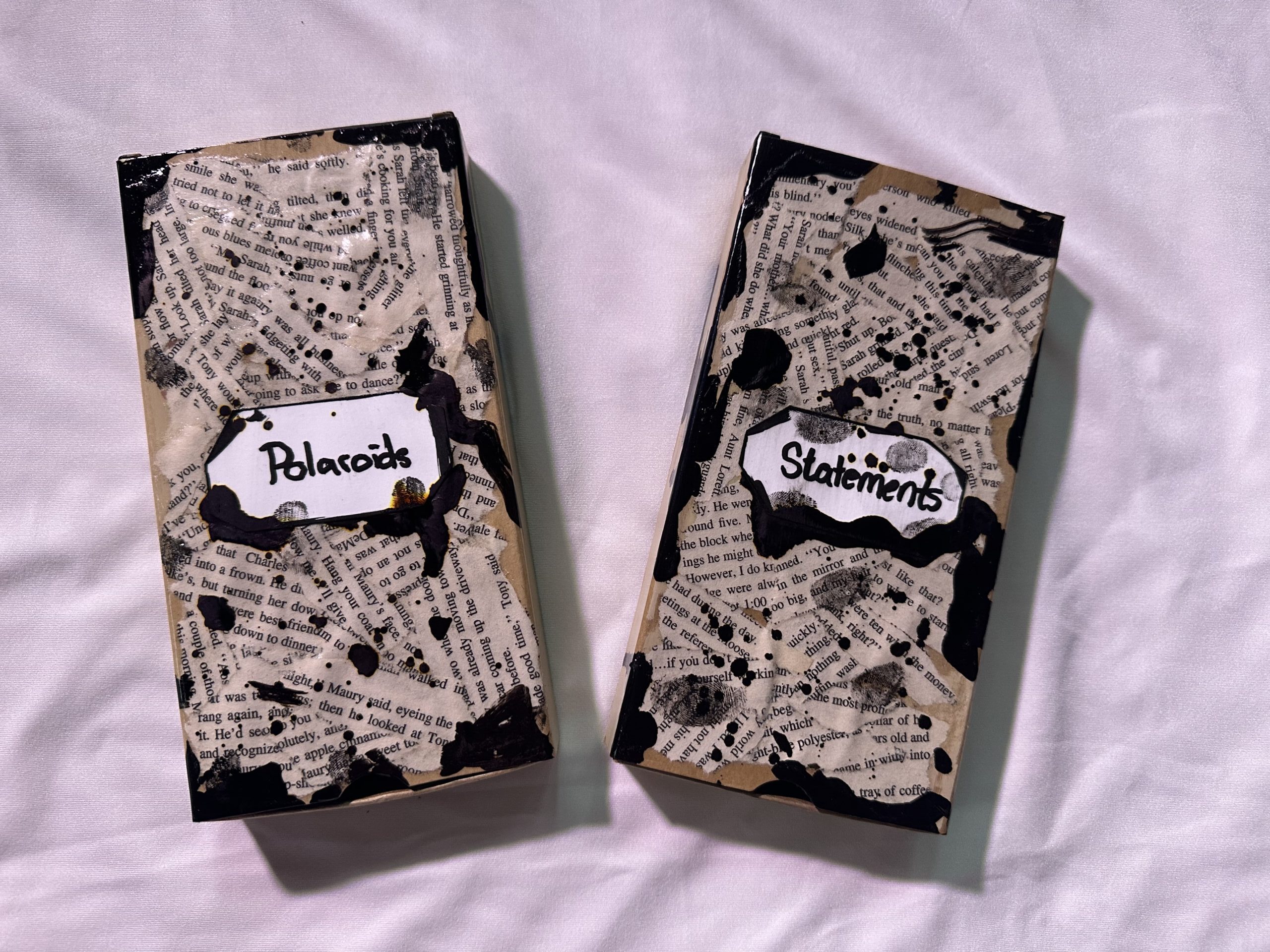
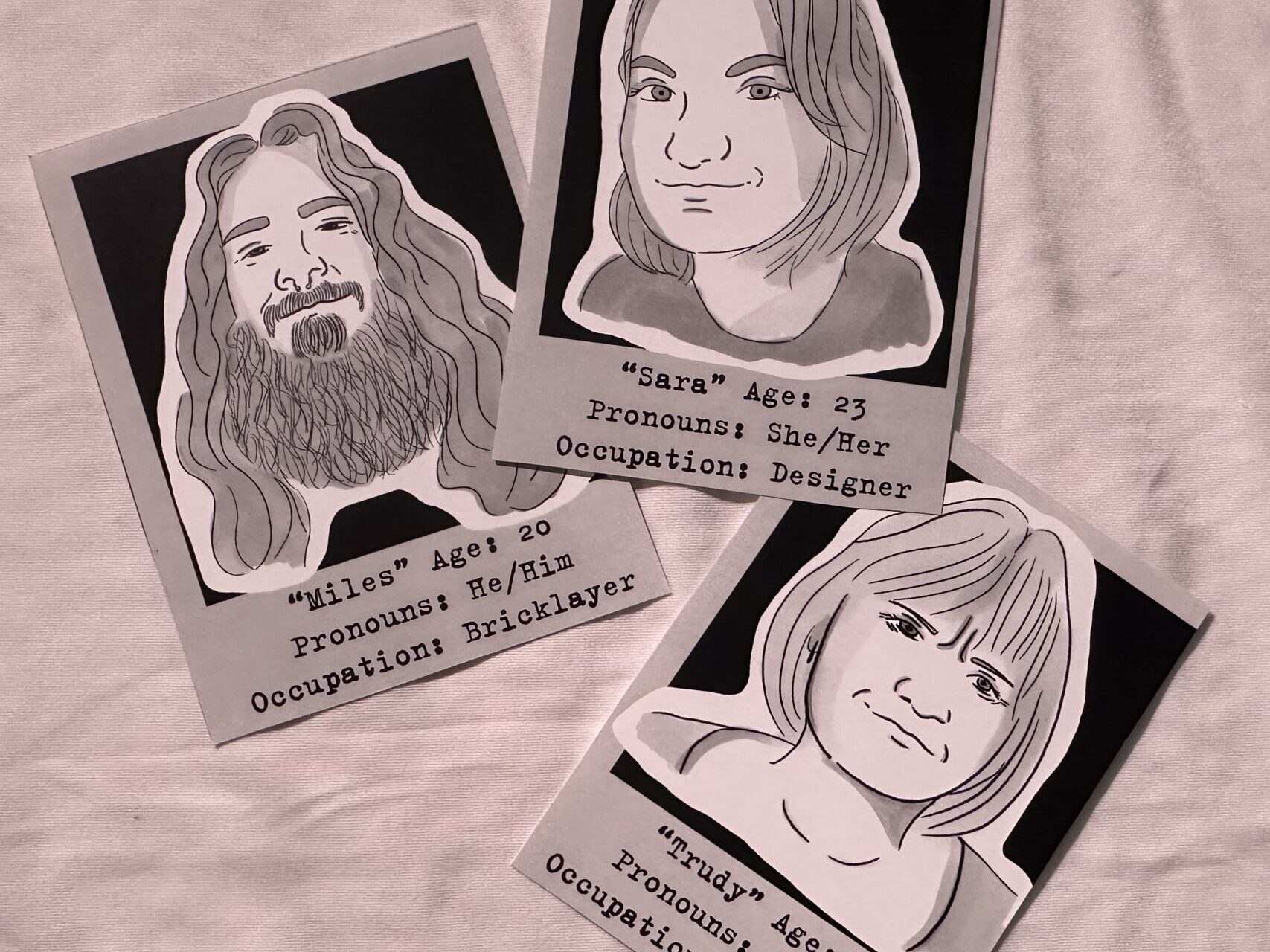
“Superficial” is a card game about avoiding assumptions about people based on the limited information provided about them, such as a photo of them, name, age, pronouns, and occupation. However, this game challenges the urge not to assume anything, as players are tasked with matching their photos to a statement they made about an experience they’ve had, whether good or bad.
This game itself has been through three versions, with the final version changing from being real people to AI-generated people to support the mechanic of variety and openness, which I wasn’t entirely able to get from the real people I interviewed.
The original format of the game contained hand-drawn photos of friends, colleagues, and family members, and their real stories. Later, the game was changed to have people created by artificial intelligence, as it was intended to test the maximum number of people that could be in the game. With further testing, it was found that by creating more explicit statements, players felt more empathy for the characters. As it can be a challenge to try to convince real people to share their trauma, with this new version, no one needed to feel inclined to do so, still creating a realistic experience, while preventing harm.
Design Process, Renditions
First Version:
What I found during the gameplay of this final version was that the more people there were, the better. And having the max number of cards be 50 can be a bit overwhelming, so after revisions, I found that having more people helped resolve this issue.
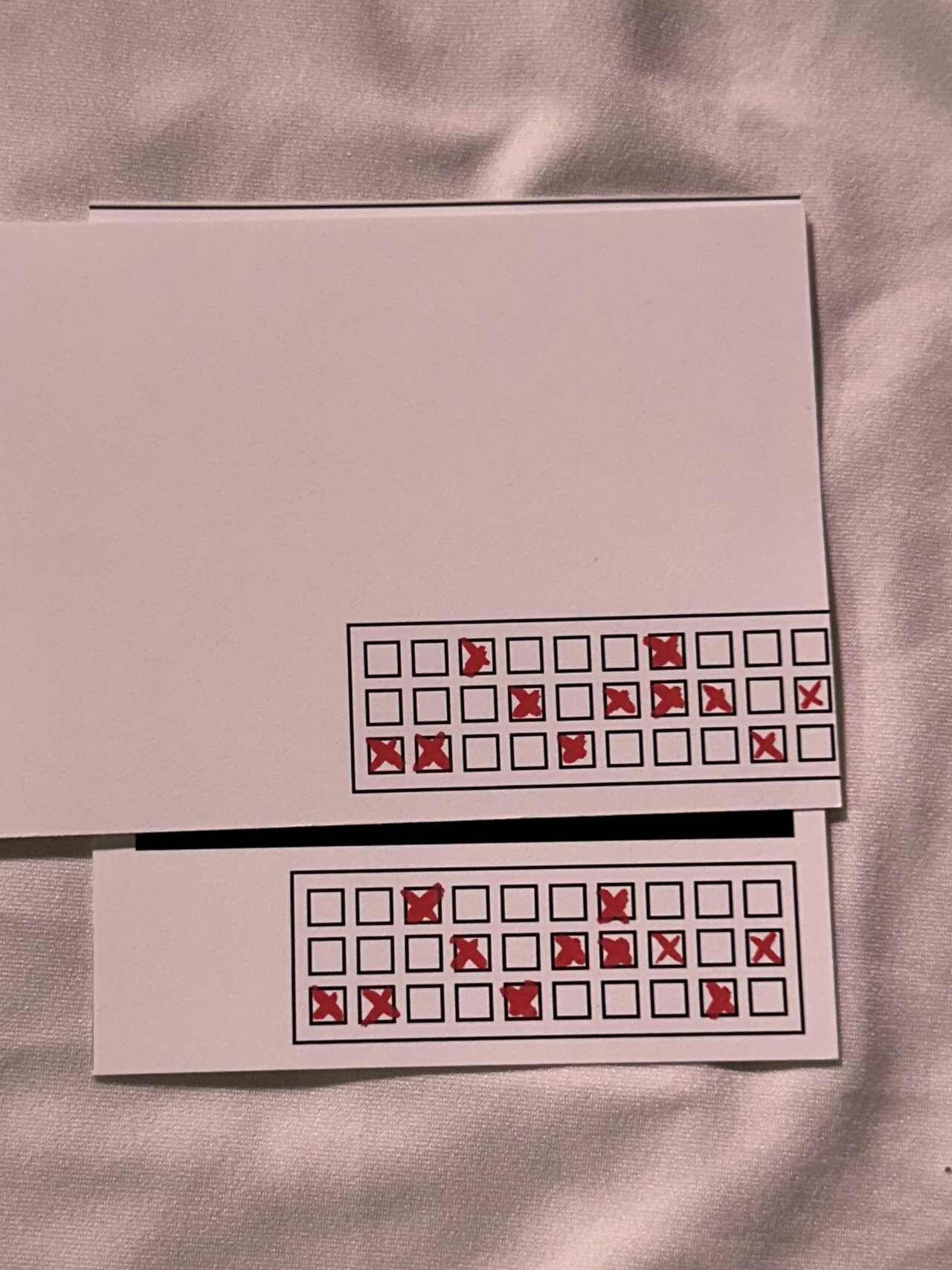
I also found that I needed to stay with players while they played to tell them if the match was right or wrong. Now, I use simple boxes with X’s that only match the card it goes with. It works perfectly and isn’t confusing to players.
Second Version: